Stop calling it brainrot
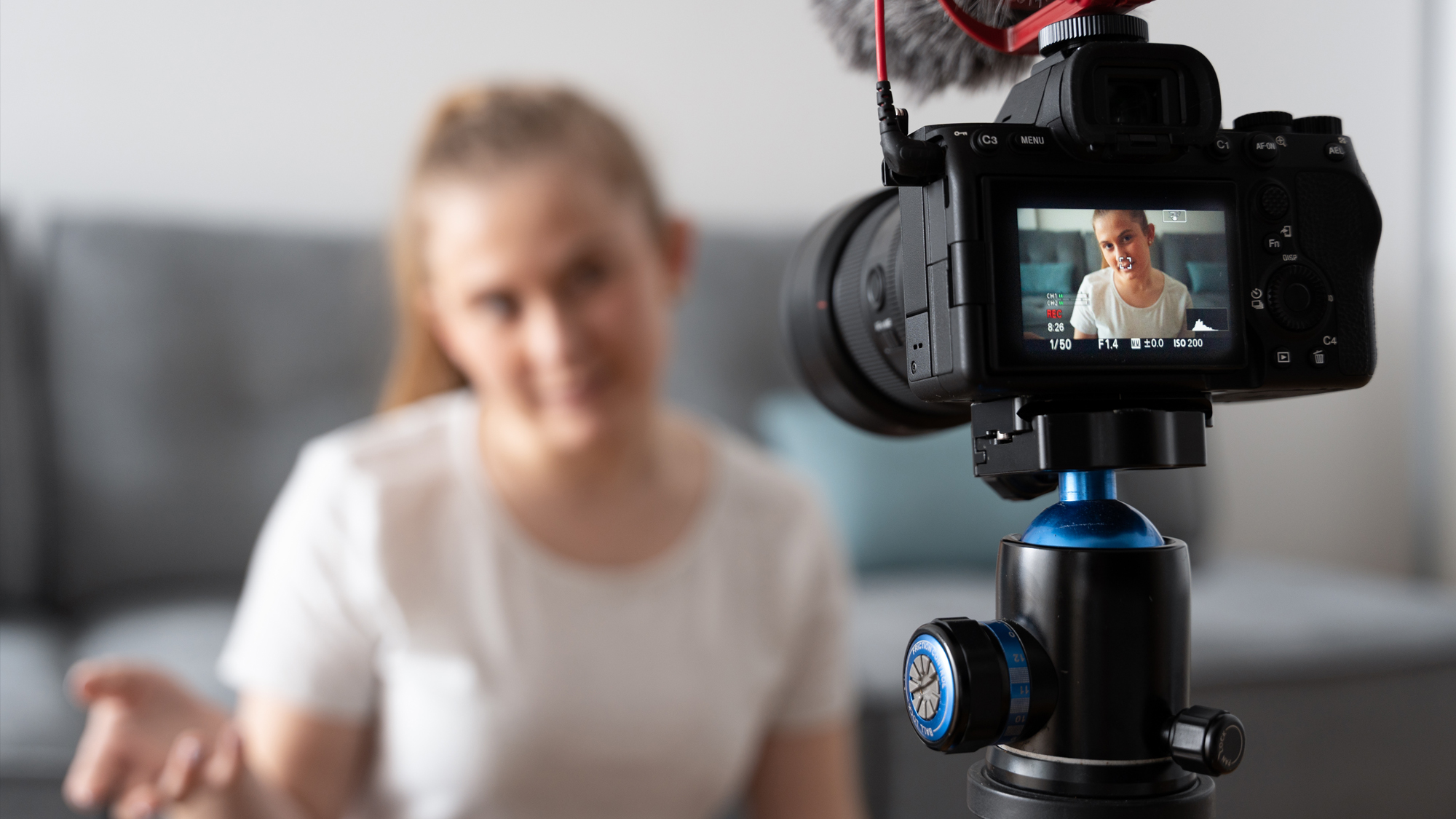
The short-form creators quietly changing culture
Something strange happened to short-form video in the public imagination. A format that reaches more than a billion people daily, that has launched careers, preserved languages, documented traditions, and made strangers feel less alone, became synonymous with everything broken about modern life. Attention rot. Dopamine loops. The end of culture.
The critique is not baseless. The platforms are designed to keep you scrolling, and the worst of what they serve up is genuinely corrosive. But the argument against short-form content has a habit of treating the container as the contents. Thirty seconds of a grandmother teaching her grandchildren a song in a language with fewer than ten thousand living speakers is not the same as thirty seconds of algorithmic rage-bait. They live on the same platform and occupy the same runtime. That is where the similarity ends.
This piece is an argument for precision. For looking at what short-form content is actually doing at its best, and for taking seriously the idea that the creative medium of our time deserves the same careful attention we have given every medium that came before it.
Every new format gets this treatment
History does not look kindly on those who dismiss new creative formats as inherently lowbrow.
In 18th-century Britain, the rise of the novel triggered widespread alarm among clergy, educators, and cultural commentators. Reading fiction, particularly among young women, was widely condemned as a gateway to idleness, moral corruption, and detachment from reality.The concern was sincere, and not entirely without basis: some novels of the period were lurid and manipulative. But the critics could not distinguish between the worst of the format and what the format was capable of. Within a century, the novel had produced Austen, Eliot, and Tolstoy, and was widely considered the highest form of literary expression.
Cinema followed the same arc. When moving pictures appeared at the turn of the 20th century, they were treated as fairground novelties, too populist and passive to be taken seriously. Critics debated well into the 1910s whether film could even qualify as a legitimate creative form. It took decades, and the accumulated evidence of what filmmakers were actually making, to shift that consensus.
Short-form vertical video is simply the latest entry in this long list. The accusation is always the same: too easy to consume, too cheap to produce, too entertaining to be meaningful. And it is always, eventually, wrong.
Four genres that deserve a closer look
Short-form content is not one thing. Like any medium that has had time to mature, it has developed distinct genres, each with its own logic, aesthetic, and audience. The four below are not the whole picture. But they point toward something that is not getting enough attention.
Living archives. One of the most quietly significant things happening on these platforms is the preservation of culture that has no other contemporary record. Indigenous and minority communities around the world are using short-form video to document languages, rituals, food traditions, and oral histories that formal institutions have largely ignored or failed to reach. In South Africa, creators posting in isiZulu, Sepedi, and other indigenous languages to document traditional cooking and farming practices like ufarm_julia have described their content as capturing meanings that cannot survive translation. In North America, a generation of Native creators has built followings by putting cultural knowledge on camera, including hoop dances, craft traditions, and everyday language, while also negotiating carefully what is appropriate to share and what is not. This is archival work. It is preservation. And it is happening in a format that costs nothing to distribute and reaches people who would never set foot in a museum or a university library.
The periphery, made visible. For most of media history, whose life was considered worth depicting was a question answered by a small number of editors, commissioners, and broadcasters, almost all of them concentrated in a handful of cities. Short-form video has broken that geography in a meaningful way. Research from India documents how creators from smaller cities and rural regions, posting in regional dialects about locally specific experiences, have built substantial audiences among people who had never seen their own lives reflected back to them in media. This is not a trivial shift. The absence of representation is not neutral. When the only stories told about a place or a community are told by outsiders or not told a tall, it shapes how that community sees itself. Short-form video has handed the camera to people who were previously only ever the subject of someone else's story.
Peer spaces for stigmatised experience. The World Health Organisation estimates that half the global population lives in countries with fewer than one psychiatrist per 100,000 people. Against that backdrop, the communities that have formed around mental health topics on TikTok and similar platforms are worth taking seriously, not just as a symptom of something broken, but as a genuine social response to an unmet need. Research from Harvard's Center for Health Communication has noted that creators in these communities have built spaces where people feel seen and cared for, like the case of kikoishot in Portugal, even when traditional medical systems have not. The risks are real and well-documented: content without professional grounding can be harmful, and platform moderation remains inadequate. But the impulse, the desire for recognition and connection around experiences that carry stigma in most social contexts, is legitimate.It is doing something that institutions have not.
Hyperlocal storytelling. A less-discussed but growing genre is content that is consciously and deliberately local: creators documenting a specific street, neighbourhood, market, or town, building what amounts to a living record of place. This is not travel content. It is not lifestyle content. It is closer to documentary, produced at a scale and frequency that no documentary budget could sustain. In an era of rapid urban change, displacement, and culturalhomogenisation, there is something genuinely countercultural about acreator who shows up, week after week, to record what a particularplace looks and sounds like right now. These videos are not made foranyone in particular. But they are, quietly, a form of resistance toforgetting.
The difference between format and content
One of the most persistent confusions in public debate about social media is treating the format as the problem. Research consistently complicates this. A large meta-analysis published in late 2025 found that while excessive short-form video use is associated with poorer cognitive and mental health outcomes, the specific content a user consumes plays a larger role in those outcomes than the medium itself. Some users find communities that genuinely support them. Others fall into algorithmic loops that reinforce anxiety or isolation. The format enables both.
This matters. If the problem were the format, the solution would be straightforward. But if the problem is more specifically about what fills the feed, then the question becomes: who is producing that content, with what intentions, and how do we support more of the kind that actually serves people?
That is a more uncomfortable question. It requires engaging with the medium rather than dismissing it.
What this means for the kind of content we want to exist
We are interested in that last question. Not in regulating platforms or measuring screen time, but in the observation that the best short-form content already exists, and that the people making it are often doing so without structural support, institutional recognition, or a coherent ecosystem around them.
What marks this content out is not subject matter. It is intention. The creators preserving minority languages who treat the platform as an archive, not a performance. The people from places that mainstreammedia forgot, building records of their own lives. The communities forming around stigmatised experience, not because platforms designed them to but because people needed them anyway.
These creators are not waiting for permission. They are already doing the work. What they often lack is connection to each other, to organisations whose missions align with theirs, and to the resources that would let them develop that work over time.
That is the gap we are here to close. Not manufacturing content for causes, but finding the people already telling the right stories and creating conditions for them to do it better.
Amplify:Good connects creators with purpose-driven content opportunities across Europe. We are building a network for creators who choose intention over noise. If that sounds like you, apply to the Good Creator Network
Sources
On the history of moral panics around new media formats
- On 18th-century anxieties about novel-reading: Jacqueline Pearson, Women's Reading in Britain 1750-1835 (Cambridge University Press, 1999).
- On cinema's early dismissal and its eventual legitimisation: Wikipedia entry on Film d'art, drawing on Britannica and academic film history sources. https://en.wikipedia.org/wiki/Film_d%27art; see also the entry on Film criticism for Ricciotto Canudo's 1911 manifesto. https://en.wikipedia.org/wiki/Film_criticism
On language preservation and indigenous creat
- "Indigenous languages thrive on TikTok with humour, culture," Times Live, February 2026. Quotes creator Snethemba Mazinga (ufarm_julia) on using indigenous language to preserve cultural knowledge in food content. https://www.timeslive.co.za/news/sci-tech/2026-02-20-indigenous-languages-thrive-on-tiktok-with-humour-culture/
- "We're not just relics of the past: How #NativeTikTok is preserving Indigenous cultures," CBS News, 2021. https://www.cbsnews.com/news/nativetiktok-is-preserving-and-showcasing-indigenous-culture/
- "Indigenous TikTok Is Transforming Cultural Knowledge," Canadian Art, 2020. Notes that constraints of the format echo those of sonnets or haiku: "Artists get creative in surprising ways when given constraints." https://canadianart.ca/essays/indigenous-tiktok-is-transforming-cultural-knowledge/
On regional and peripheral voices
- "The rise of regional voices: How tier-2 influencers redefine cultural capital in digital India," The Week, May 2025.Documents creators from Indore, Patna, Coimbatore, and Guwahati building audiences around locally specific content in regional dialects. https://www.theweek.in/news/biz-tech/2025/05/29/the-rise-of-regional-voices-how-tier-2-influencers-redefine-cultural-capital-in-digital-india.html
On peer mental health communitie
- "Inside TikTok's Mental Health Communities," Think Global Health, February 2025. Quotes Amanda Yarnell, senior director of Harvard's Center for Health Communication: "Health creators from these communities have cultivated spaces on platforms such as TikTok, where people feel seen and cared for, even when traditional medical systems have not." https://www.thinkglobalhealth.org/article/inside-tiktoks-mental-health-communities
- WHO estimates on global psychiatry access: referenced in the ThinkGlobal Health article above.
On short-form video and mental health outcomes
- "Large meta-analysis links TikTok and Instagram Reels to poorer cognitive and mental health," PsyPost, December 2025. Notes that content consumed, not the medium itself, is the primary driver of outcomes. https://www.psypost.org/large-meta-analysis-links-tiktok-and-instagram-reels-to-poorer-cognitive-and-mental-health/
